
Fed Night, Gold Morning: Why I’m Not Bullish on This Decision
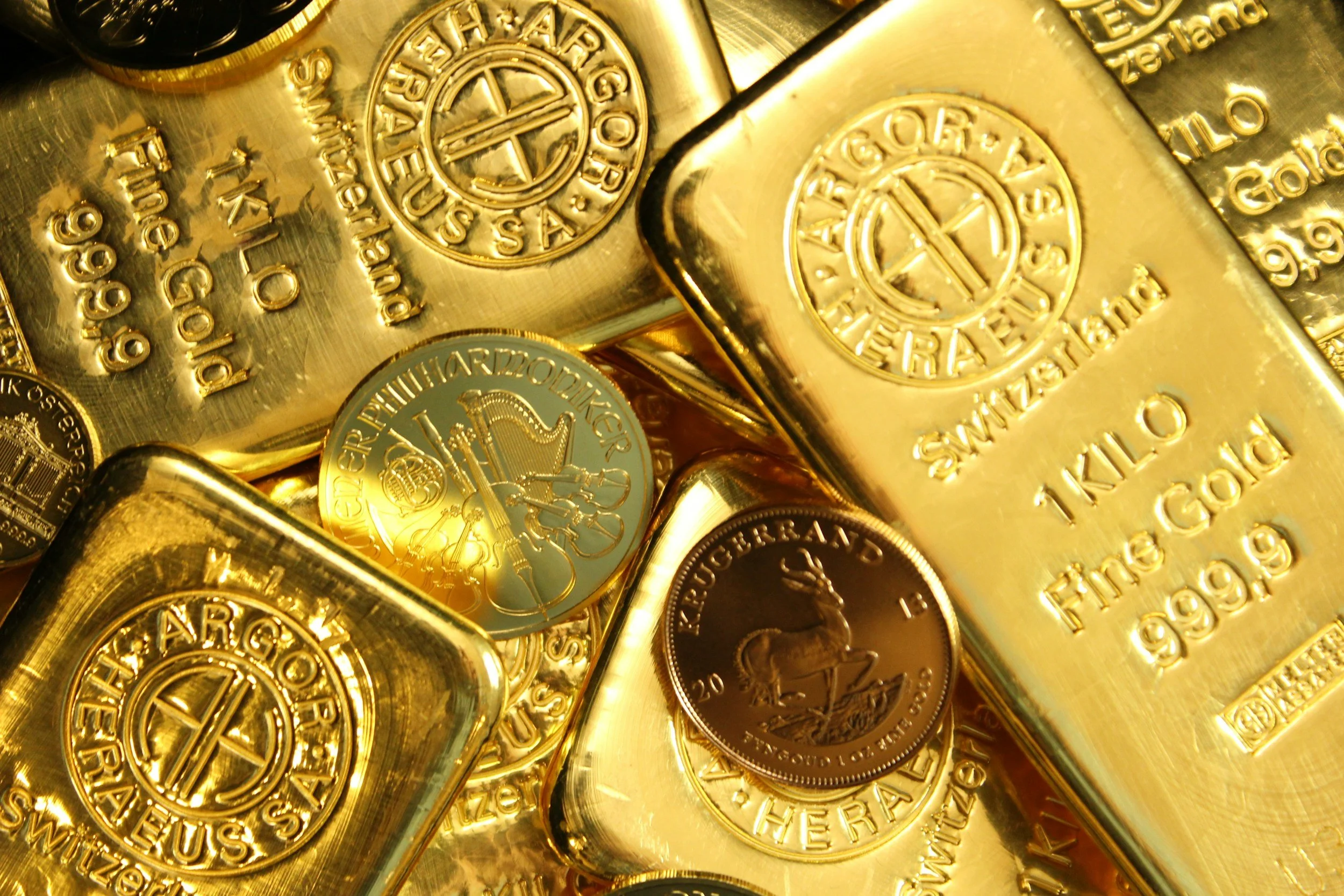
Gold has had a sharp, vertical run — and that’s exactly why today’s Fed decision matters more than the headline. When price stretches this far, the next move is often not about “gold fundamentals.” It’s about positioning, real yields, the dollar, and forced unwinds.
Right now, XAUUSD is in the $5,200–$5,300 area. Into this event, my stance is simple:
My take: I’m not bullish on gold into the Fed.
What I’m watching: A pullback toward $4,600 first, and $4,200 if the message reads neutral-to-hawkish and triggers a larger reset.
This is not a “gold is dead” thesis. It’s a Fed event setup where markets often punish crowded trades.
Why gold can fall after the Fed
Gold doesn’t pay interest. That single fact drives most of the short-term reaction.
1) Real yields are the silent hammer
If the Fed comes across neutral-to-hawkish, the market can price a higher “for longer” path. That tends to push real yields up (or at least stops them from falling). Higher real yields increase the opportunity cost of holding gold, and the price can drop quickly.
2) A firmer USD becomes an instant headwind
Gold’s latest run has been helped by dollar softness. If the Fed discourages aggressive rate-cut expectations, the USD can stabilise or bounce. That alone can pressure XAUUSD even if nothing else changes.
3) Crowding + leverage = air pockets
When a market repeatedly makes new highs, it attracts fast money. Fast money doesn’t debate “long-term value.” It exists when momentum pauses.
On Fed days, the sequence often looks like this:
Fed tone → yields move → USD reacts → gold reprices → leveraged longs get cleaned.
That’s how you get sudden drops that feel “bigger than the news.”
4) The first move is often a trap
Many Fed days produce a knee-jerk move on the statement, then the “real” move comes during the press conference. It’s common to see traders get chopped unless they treat it as an event trade rather than a normal day.
Scenarios I’m watching tonight
Scenario A: Neutral-to-hawkish Fed (my base case for a dip)
• The Fed avoids sounding comfortable about cuts.
• Real yields firm up, USD catches a bid.
• Gold corrects toward $4,600.
• If the selling accelerates (stops + liquidation), $4,200 becomes reachable.
Scenario B: Clear dovish tilt (less likely, but possible)
• The Fed signals comfort easing conditions sooner.
• USD stays soft, real yields don’t rise meaningfully.
• Gold holds up and can retest highs.
Scenario C: Mixed message (most common)
• Statement looks fine, presser adds ambiguity.
• First move gets faded.
• Second move becomes the trend.
My trading stance (simple)
• Not bullish on the Fed.
• I’m not chasing highs before a major catalyst.
• If we get a sharp reset into $4,600 / $4,200, I’ll treat it as a positioning clean-out, not automatically a long-term trend break — but only price action will confirm.
What I’d tell my traders (a quick checklist)
1. Don’t commit bias before the press conference.
2. Mark levels, not headlines: $4,600 then $4,200.
3. If we dump fast, don’t panic-sell late — late sellers often fund the bounce.
4. If we spike on the statement, don’t assume it’s real until after Powell speaks.
5. Use event risk rules: smaller size, wider logic, stricter invalidation.
Closing note
Gold can still be structurally bullish long-term — but tonight is about the Fed’s tone and the market’s positioning. From these highs, even a “not-too-hawkish” message can trigger profit-taking.
My view remains tactical: expect a drop first, then reassess.