
Oil War Impact on India: Rupee Recovery, Crude Risk and Monday Market Outlook
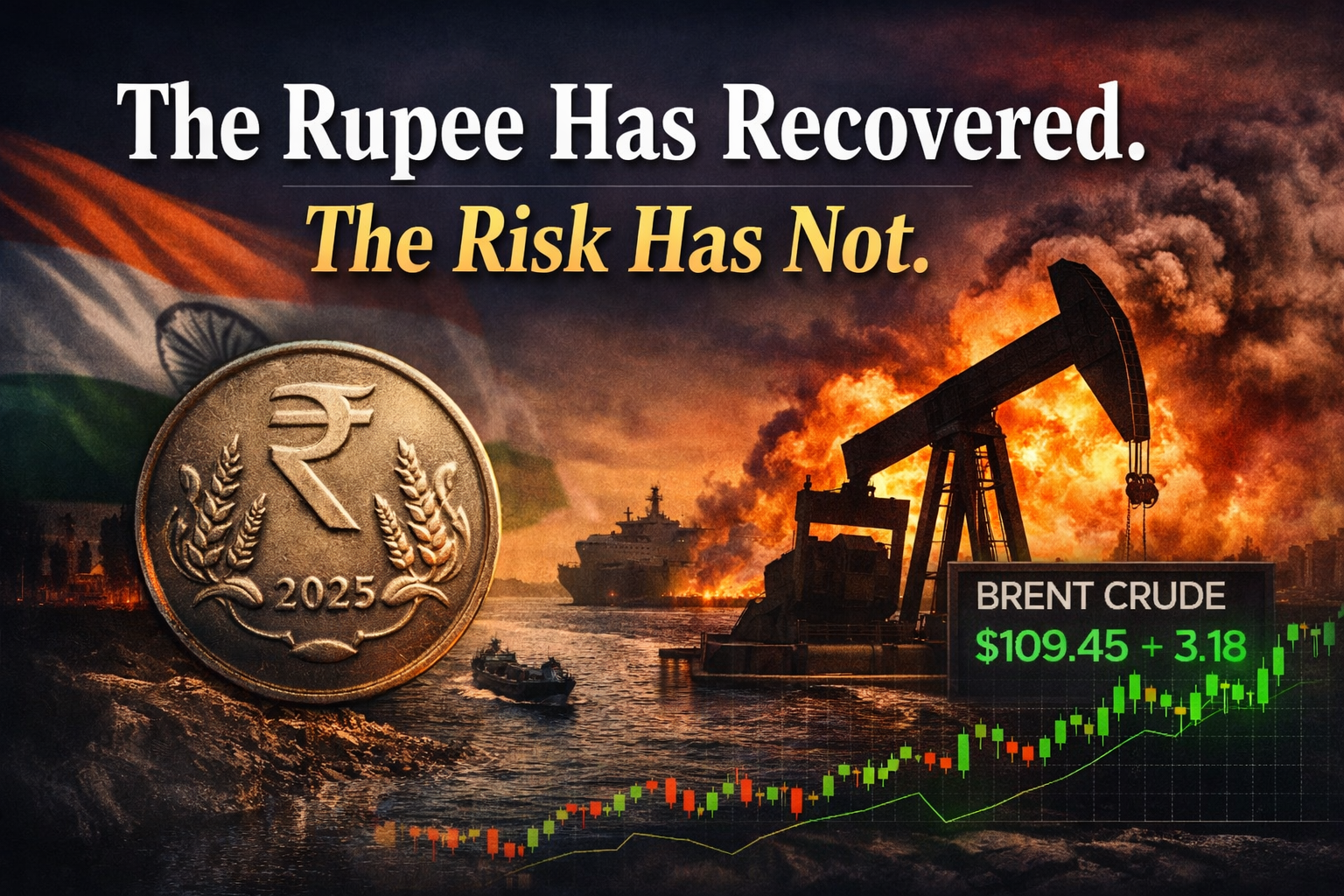
The Rupee Has Recovered. The Risk Has Not
India enters Monday’s market open with a stronger rupee and a calmer tone than it had just days ago. But that relief is fragile. Oil remains elevated near the $109 to $110 range, OPEC+ is preparing only a modest production increase of about 206,000 barrels a day, and traffic through the Strait of Hormuz is improving from crisis levels rather than returning to full normalcy. For India, that means the story is no longer just about war headlines. It is about how war-driven oil stress spills over into the rupee, inflation, business costs, and market confidence.
Why India’s Monday Market Open Matters More Than the Headline Noise
The most important question for investors is not whether the rupee bounced. It did. The more important question is whether that bounce can hold if crude stays high and geopolitical risk remains active. On April 2, the rupee rose 1.8% to 93.10 per dollar after touching a record low of 95.21 the previous session, following RBI steps aimed at curbing speculation and arbitrage in the currency market. That recovery matters because it eases immediate panic, but it does not remove the original pressure coming from oil and external risk.
The AA India Desk view is that Monday is a test of whether policy relief can temporarily outrun imported oil stress. If the rupee stays stable and crude cools, the market gets room to breathe. If oil pushes higher again, the relief trade becomes much harder to sustain. That is why the open matters. It will show whether India is moving into stabilisation, or simply pausing inside a still-active shock.
OPEC+ Is Signalling Relief, but Not Enough to Eliminate Risk
OPEC+ is expected to raise supply by roughly 206,000 barrels a day, according to Bloomberg. That helps sentiment at the margin, but it is not large enough to fully neutralise a wartime risk premium in global oil markets. When shipping routes are stressed, and traders are still pricing geopolitical disruption, a symbolic supply increase can calm nerves without truly changing the physical tightness that importers fear.
For India, that distinction is crucial. A symbolic supply increase may help prevent a fresh panic surge in crude, but it does not guarantee a return to comfortable pricing. As long as oil stays close to the recent $109 to $110 range, India continues to face pressure on imported costs, the currency, and market sentiment.
The Strait of Hormuz Is Moving Again, but It Is Still Not Normal
A lot of commentary treats Hormuz as either open or closed. That misses the actual market risk. Bloomberg’s tracking showed the seven-day rolling average of transits rising to the highest level since the war began, with 13 ships crossing since Friday morning in that update. That is an improvement, but it does not mean normalcy has returned. It means traffic is recovering from stressed conditions.
This matters because markets do not need a total shutdown to keep oil expensive. They only need persistent uncertainty around shipping confidence, route safety, cargo timing, and insurance costs. Even a partially functioning Hormuz can keep the oil market nervous, and that nervousness is enough to keep pressure on oil-importing economies like India.
Why India Is More Exposed Than Many Other Markets
India’s vulnerability is structural. The country’s crude supply remains secure, but it is still deeply connected to global energy pricing. Government data from March said that India now imports crude from around 40 countries and that about 70% of crude imports are routed outside the Strait of Hormuz, up from about 55% earlier. The same official briefing said India’s daily crude consumption is about 55 lakh barrels and that secured volumes currently exceed what would normally have arrived through Hormuz during this period.
That diversification helps, but it does not make India immune to a price shock. Higher crude still hits the country through fuel costs, transport, industrial inputs, inflation expectations and the rupee. That transmission is already visible in domestic pricing. India raised jet fuel prices by 8.6% to Rs. 104,927 per kiloliter in Delhi and commercial LPG by 10.4% to ₹2,078.50 per 19-kg cylinder as the Middle East crisis pushed global energy prices higher.
Rupee Recovery Is Real, but It Is Policy-Led
The rupee’s rebound deserves respect, but it also needs context. Reuters reported that RBI measures included barring banks from offering rupee non-deliverable forwards to clients, capping open positioning, and restricting rebooking of cancelled forward contracts. Those moves changed the economics of speculative activity and triggered aggressive dollar selling, helping drive the rupee’s best day in over a decade.
The AA India Desk view is that this should be framed as stabilisation, not resolution. The rupee recovered because the RBI intervened decisively in the market structure. It did not recover because oil suddenly became cheap or because geopolitical risk disappeared. That is why investors should watch follow-through, not just the headline bounce. One strong session can calm markets. Several stable sessions are what begin to rebuild confidence.
The Oil Shock Is Already Reaching the Real Economy
This is no longer only a trading desk story. It is beginning to affect the broader economy. India’s manufacturing PMI fell to 53.9 in March from 56.9 in February, marking the slowest expansion in nearly four years, as rising oil costs and Middle East turmoil weighed on demand, input costs, and supply chains.
That data point matters because it shows how oil shocks spread. First, they hit commodities and currencies. Then they move into corporate costs, business sentiment, and activity. If crude stays elevated, markets will increasingly focus on margin pressure and inflation spillover rather than just the latest war headline.
What Investors Should Watch at Monday’s Open
The AA India Desk would focus on three signals:
First, Brent crude. If oil softens from the recent $109 to $110 area, the market can extend relief. If it turns higher again, the pressure on India’s import-sensitive sectors returns quickly.
Second, the rupee. If it holds close to post-RBI relief levels, the market will take that as confirmation that panic has eased. If it starts weakening again quickly, traders will treat the rebound as tactical rather than durable.
Third, cost-sensitive sectors. Aviation, chemicals, paints, logistics, and other fuel-linked businesses are likely to reflect the shock fastest because domestic energy-linked prices are already moving up.
Sector View for Monday
Most exposed
Aviation, chemicals, paints, tyres, logistics, and other fuel-sensitive businesses remain the first line of pressure because higher energy costs feed directly into their operating economics.
Relatively better placed
Upstream energy and some commodity-linked names are better positioned because elevated crude is less damaging to them than to downstream consumers. This is an inference based on the current commodity backdrop and sector sensitivity.
Swing basket
Banks are likely to behave as a confidence barometer. If the rupee remains steady and crude cools, banks can help extend relief. If macro stress returns, banks may struggle to lead. This is an inference based on the rupee’s recent role in overall market sentiment.
Final Take for Indian Investors
India has gained some breathing room, but not certainty. The rupee has rebounded sharply, Hormuz traffic is no longer as frozen as it was during the worst part of the shock, and India’s energy diversification gives policymakers a stronger cushion than many feared. But crude is still high, domestic cost pressure has already begun to show up, and the real economy is beginning to reflect the strain.
AA India Desk base case is a cautiously firmer or range-bound Monday open, supported by rupee stabilisation and a somewhat calmer shipping backdrop. But unless oil cools more decisively, any relief is still likely to be tactical rather than transformational. For now, India is not trading certainty. It is trading resilience.
Want more India macro and market intelligence before the opening bell?
Follow AA India Desk Whatsapp Channel for Free, for timely analysis on crude, the rupee, inflation, and market-moving global developments.