
The Strait of Hormuz Is Not a Distant Flashpoint. It Is a Direct Threat to the Common Man.
Some places in the world look small on a map but carry the weight of entire economies on their back.
The Strait of Hormuz is one of them. To many, it is a narrow waterway between Iran and Oman. To markets, it is an oil chokepoint. To governments, it is a strategic vulnerability. But to the common man, it is something far more serious: a silent trigger that can make daily life more expensive, more uncertain, and more fragile.
That is the part elite commentary often misses.
When tensions rise around the Strait of Hormuz, the first reaction is usually geopolitical. Television studios discuss military responses. Analysts discuss shipping routes. Traders discuss crude spikes. Diplomats discuss escalation risk.
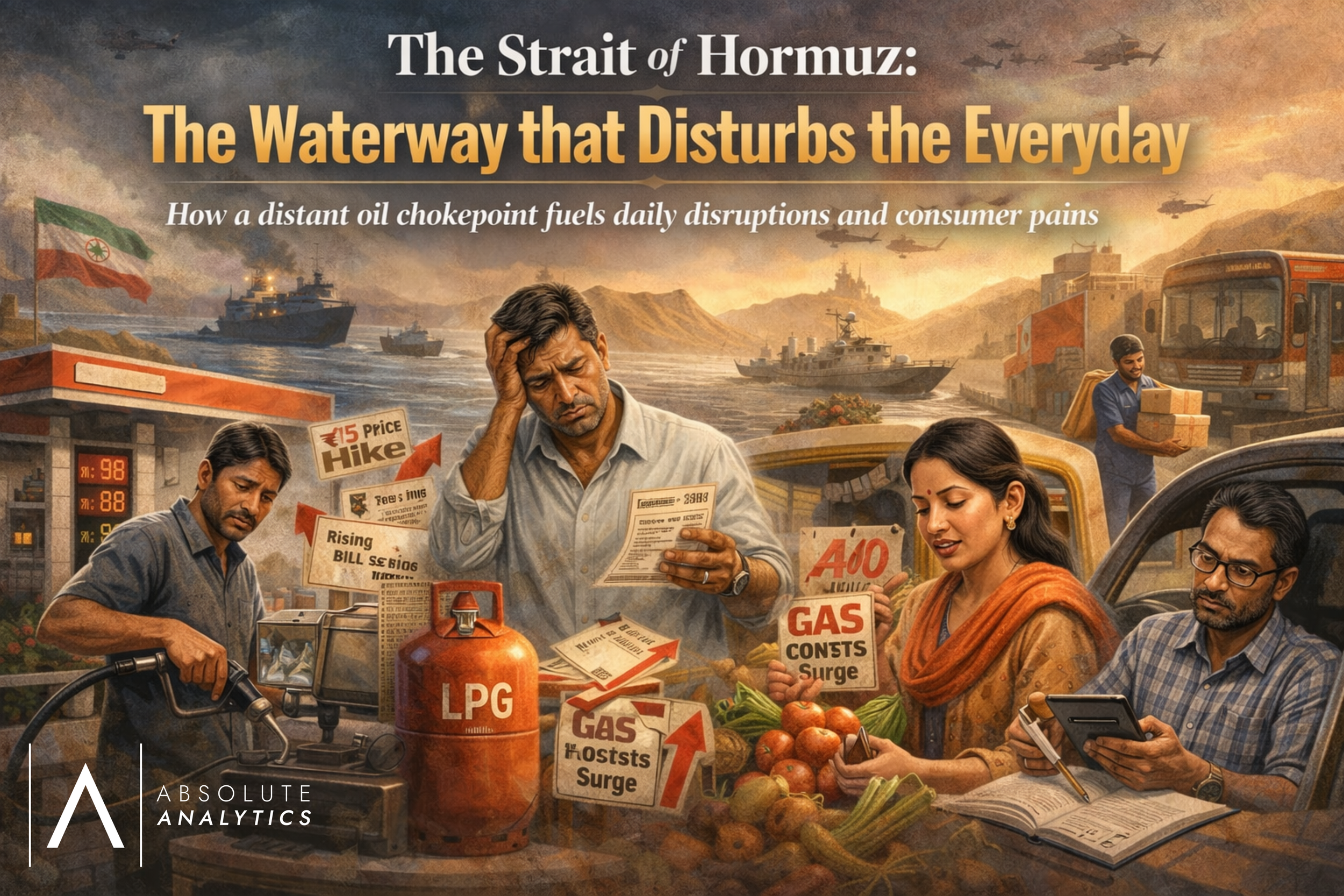
But the common citizen does not live inside these discussions. He lives inside consequences. He feels the Strait of Hormuz not as a maritime issue, but as a higher fuel bill, a more expensive gas cylinder, rising transport fares, costlier vegetables, tighter business margins, weaker consumer confidence, and a monthly budget that suddenly stops making sense.
That is why this is not merely a foreign policy issue. It is a household issue. A narrow waterway with the power to disrupt ordinary life
The global economy has built enormous dependence on a few critical arteries. Hormuz is among the most dangerous examples of that dependence. A meaningful share of the world’s oil and LNG passes through this route. That means every threat to this corridor is not just a shipping risk. It is an inflation risk. It is a confidence risk. It is a political risk. It is a livelihood risk.
And whenever such a route comes under pressure, the world is reminded of an uncomfortable truth: modern economies may look vast and diversified, but many of them still rest on fragile bottlenecks.
This is where the problem becomes moral, not just economic.
Because powerful people can hedge.
Governments can intervene. Oil companies can delay pain. Traders can profit from volatility. Large institutions can restructure exposure.
The common man cannot. He cannot hedge inflation. He cannot ensure his grocery bill. He cannot reroute his monthly expenses. He cannot protect himself from rising logistics costs hiding inside every product he buys. He simply absorbs the blow.
This is how global fragility becomes personal suffering.
There is a lazy habit in public discourse: reducing every oil shock to one question — will petrol prices go up?
That question is far too small for the problem. The real damage begins much earlier and runs much deeper.
When the Strait of Hormuz becomes unstable, crude prices react. Shipping insurance premiums rise. Freight costs climb. Import planning gets disrupted. Refiners face uncertainty. Currency markets tighten. Governments begin balancing inflation against fiscal pressure. Businesses start recalculating costs. Companies with thin margins either pass those costs to consumers or absorb losses that weaken future hiring and investment.
That entire chain eventually lands where it always lands: on the shoulders of ordinary people.
The auto driver pays more for fuel. The farmer pays more for transportation. The shopkeeper faces higher supply costs. The manufacturer faces tighter margins. The family pays more for food, travel, gas, delivery, and power-linked consumption. This is what geopolitical risk looks like when it reaches the street.
Not dramatic. Not cinematic. Just relentless.
India cannot afford to treat Hormuz as someone else’s problem. For India, the Strait of Hormuz is not a remote strategic concern to be observed from a safe distance. It is an economic vulnerability with direct domestic consequences.
A country that imports a large share of its energy cannot pretend that instability in the Gulf is merely an external affair. Every serious disturbance in that corridor has the potential to feed inflation, pressure the rupee, widen macroeconomic stress, and complicate policy decisions.
And in India, inflation is never just a statistic. It is household pressure. It is the difference between saving and surviving.
It is the difference between margin and loss for small businesses. It is the difference between manageable living and quiet financial suffocation for the middle class.
This is why energy shocks in India are socially sensitive in a way many analysts underestimate. A rise in crude is not confined to the fuel pump. It leaks into transport, food distribution, manufacturing, household consumption, and inflation expectations. Even when retail fuel prices are politically cushioned, the cost does not disappear. It is merely shifted to oil companies, to government finances, or to a later date.
Pain delayed is not pain removed. The real threat is not a spike. It is repeated insecurity.
A one-day surge in crude can be explained away. A one-week supply scare can be managed. Governments can talk down panic. Strategic reserves can help soften the blow. Alternative cargoes can be sourced.
But repeated insecurity is different. Repeated insecurity changes behaviour.
It alters how governments allocate their budgets. It impacts how importers manage risk. It influences how businesses evaluate pricing and risk. It affects consumer spending habits. It shapes investors' perceptions of inflation. It transforms how central banks approach economic stability.
That is the true danger of the Strait of Hormuz.
Not just the immediate spike in oil, but the normalisation of anxiety around one of the world’s most critical energy corridors.
Once insecurity becomes persistent, higher costs stop looking temporary. They start becoming structural.
Structural cost pressure affects the average person the most. While temporary shocks can be managed, persistent pressures can erode dignity. We have built a global system that passes fragility down to the most vulnerable.
The issue at hand goes beyond the Strait of Hormuz; it reflects the type of world economy we have constructed around it. We prioritised efficiency over resilience and created systems that assume peace, relying on chokepoints that are susceptible to conflict. Our supply chains are designed so that one disruption in a single corridor can ripple across continents, affecting kitchens, workshops, taxis, warehouses, and homes.
When a shock occurs, the burden inevitably falls on those at the bottom. This is the unspoken rule of modern economics: profits are privatised during stable periods, but fragility is shared during crises. This phenomenon is especially evident in the energy sector. When oil flows freely, markets celebrate efficiency. However, when oil routes are threatened, ordinary citizens are expected to adjust, which is not a viable strategy but rather a sign of systemic weakness.
India needs a realistic approach, not just comforting statements. The country's response to instability linked to Hormuz must be grounded in reality. This entails a faster diversification of energy sources, building stronger reserves, and implementing better risk management practices. Serious consideration must be given to vulnerabilities associated with liquefied natural gas (LNG). We need to insulate households where possible, acknowledging that this insulation is not without costs.
We must understand that energy security is not merely an abstract policy concept; it is essential for protecting daily life. If India does not adequately prepare for these shocks, every escalated conflict in the Gulf will translate into inflation that affects Indian households. Once families exist in a state of continuous cost anxiety, economic growth will become weaker, narrower, and more unequal.
Final word
The Strait of Hormuz is often described as a chokepoint for oil. That description is correct, but incomplete. It is also a chokepoint for economic stability.
A chokepoint for inflation control.
A chokepoint for household confidence.
A chokepoint for the financial dignity of ordinary citizens.
The common man may never see the Strait of Hormuz. He may never follow tanker routes. He may never watch geopolitical briefings.
But he will pay for its disruption. At the fuel station, at the grocery store, in transport fares, in cooking gas, in business costs, in the silent shrinking of what his income can buy.
That is why Hormuz should not be discussed as a distant strategic drama.
It should be understood for what it truly is, a narrow strip of water with the power to reach into millions of homes.